Rudbeckia has earned its reputation as one of the finest late-summer plants. Its bright colour, long flowering season, wildlife value makes it an indispensable addition to gardens of all sizes. Whether planted in a formal border, a naturalistic prairie scheme, or a wildlife-friendly garden, rudbeckia delivers year after year.
Few flowers capture the essence of late summer quite like rudbeckia. With its bright daisy-like blooms, rich golden-yellow petals, and long flowering season, these cheerful plants have become a favourite among gardeners across Europe and North America. Commonly known as Black-Eyed Susan, rudbeckia brings warmth, colour, and reliability to borders and wildlife gardens when many other plants begin to fade.
Rudbeckia belongs to the Asteraceae family, the same family as daisies, sunflowers, and asters. The genus is native to North America, where various species grow naturally in prairies, meadows, and open woodland areas. The plant was named by the famous Swedish botanist Carl Linnaeus in honour of his mentor, Olof Rudbeck, a renowned scientist and professor at Uppsala University.
Native American tribes recognised the value of Rudbeckia long before it became popular in ornamental gardens. Some species were used in traditional medicine to treat a variety of ailments, while others were valued for their ability to thrive in difficult conditions. European settlers quickly appreciated the plant’s beauty and hardiness, and by the nineteenth century rudbeckia had become a common feature in cottage gardens and public landscapes..
One of rudbeckia’s greatest strengths is its ease of cultivation. Even novice gardeners can achieve impressive displays with minimal effort.
Choosing a site and planting
Rudbeckia performs best in full sun, receiving at least six hours of direct sunlight each day. While it can tolerate partial shade, flowering may be reduced, and plants can become less compact.
The plant prefers well-drained soil but is remarkably adaptable. It will grow in clay, loam, or sandy soils provided they are not permanently waterlogged. Once established, many varieties display excellent drought tolerance.
Seeds can be sown directly outdoors in spring after the last frost or started indoors several weeks earlier. Perennial varieties may take a year to reach their full flowering potential, but annual and short-lived perennial forms often bloom in their first season.
Young plants should be spaced approximately 30–60cm apart, depending on the mature size of the variety. Good spacing promotes air circulation and reduces the risk of fungal diseases.
Newly planted rudbeckia require regular watering until established. Mature plants need surprisingly little attention and generally only require supplemental watering during prolonged dry periods.
An annual application of compost or a balanced fertiliser in spring is usually sufficient. Excessive feeding can encourage lush foliage at the expense of flowers.
Deadheading spent blooms encourages continued flowering and keeps plants looking tidy. However, many gardeners leave the seed heads intact in autumn, as they provide winter interest and a valuable food source for birds.
Perennial varieties benefit from division every three to five years to maintain vigour and prevent overcrowding. This is best carried out in spring or autumn.
Why rudbeckia is such a popular summer flower
The popularity of rudbeckia is no accident. It possesses a combination of qualities that make it exceptionally valuable in modern gardens.
Unlike many perennials that bloom for only a few weeks, rudbeckia can flower continuously from midsummer well into autumn. This extended display ensures a reliable source of colour during one of the busiest periods in the gardening calendar.
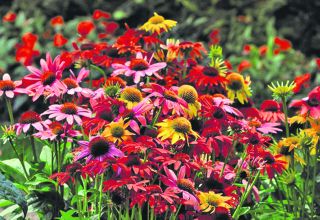
The vibrant yellow, gold, bronze, and orange tones instantly brighten borders and create a warm, inviting atmosphere. These colours are particularly effective in late summer when sunlight takes on a softer quality.
Bees, butterflies, hoverflies, and other beneficial insects are highly attracted to rudbeckia flowers. As concerns about pollinator populations continue to grow, gardeners increasingly seek plants that provide valuable nectar and pollen resources.
Many modern gardeners have limited time available for maintenance. Rudbeckia’s toughness, drought resistance, and minimal care requirements make it an ideal choice for busy households.
The sturdy stems and long-lasting blooms make rudbeckia highly suitable for floral arrangements. Freshly cut flowers can remain attractive in a vase for over a week.
Popular varieties
Plant breeders have introduced many outstanding cultivars. Some of the most popular include:
Rudbeckia fulgida ‘Goldsturm’
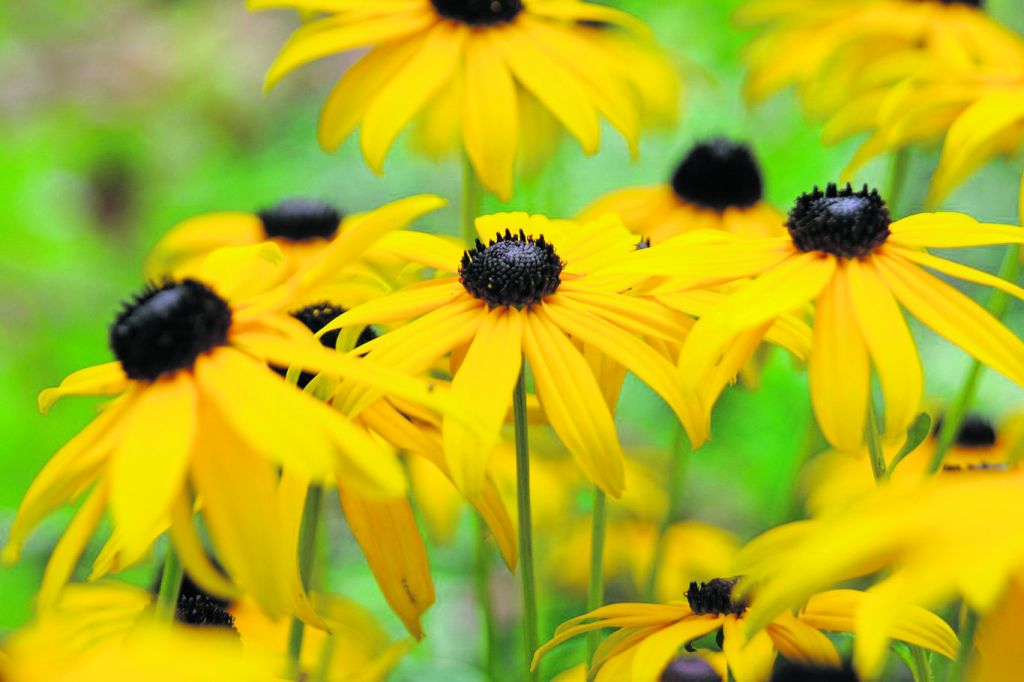
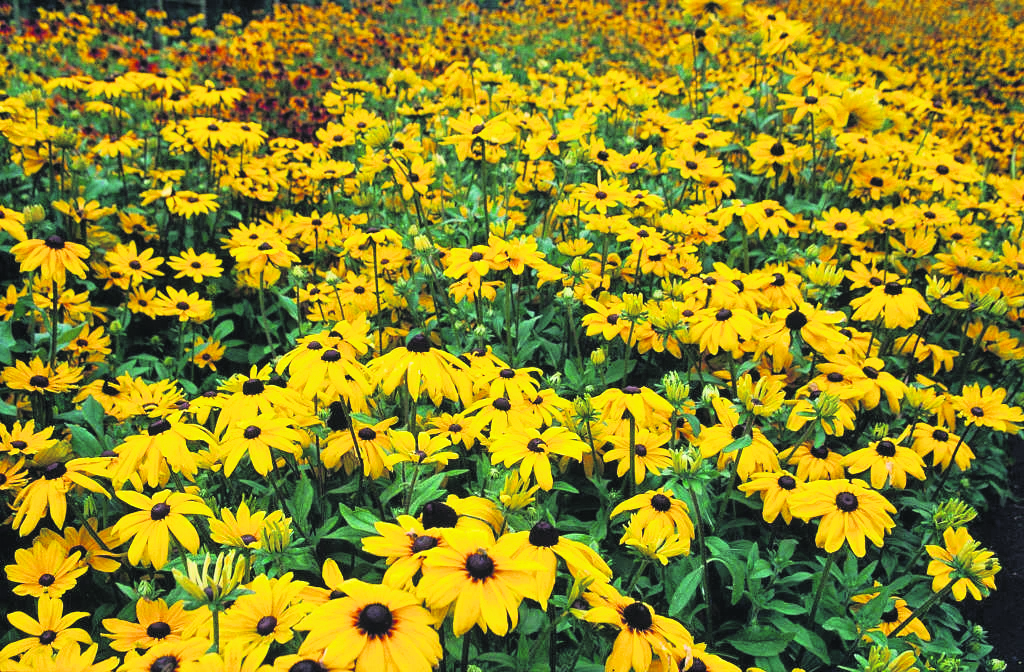
Perhaps the best-known perennial Rudbeckia ‘Goldsturm’ produces masses of golden-yellow flowers with prominent dark centres. Its reliability, disease resistance, and long flowering period have made it a garden classic.
Rudbeckia hirta
Often grown as an annual or short-lived perennial, this species includes many of the traditional Black-Eyed Susan forms. It flowers freely and is available in a wide range of colours.
Rudbeckia ‘Cherry Brandy’
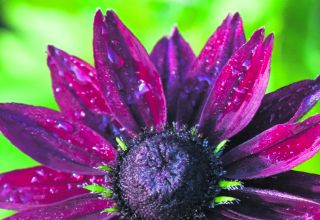
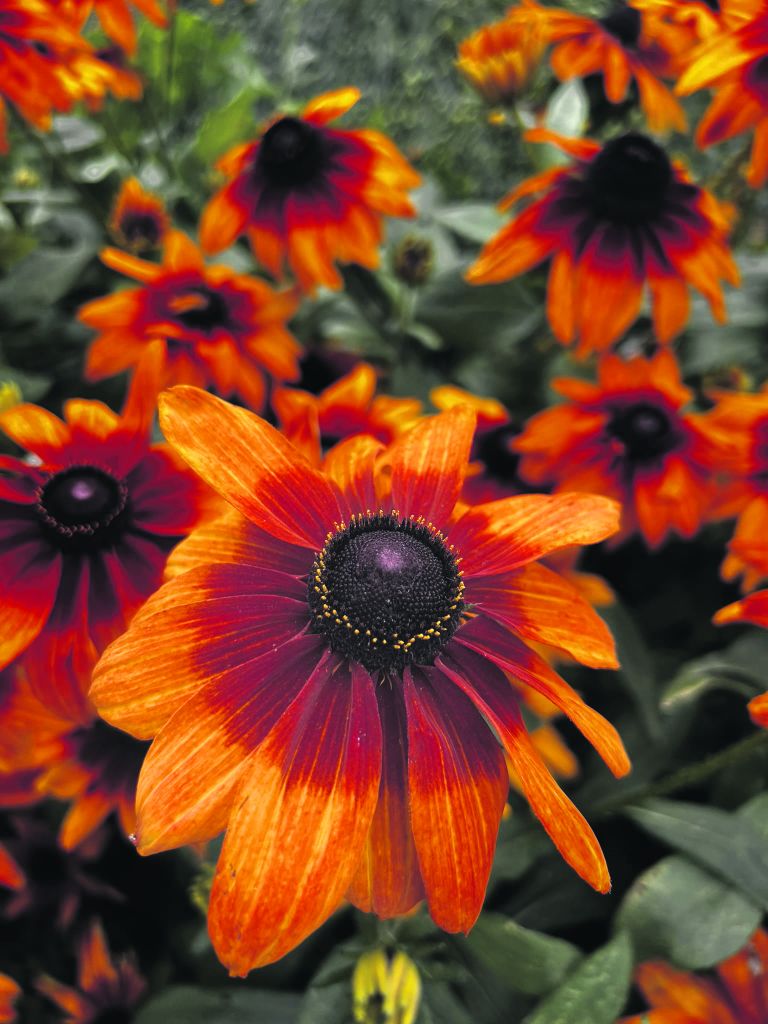
A striking variety featuring rich burgundy-red petals surrounding dark centres. It offers a dramatic alternative to traditional yellow forms and works particularly well in contemporary planting schemes.
Rudbeckia ‘Prairie Sun’
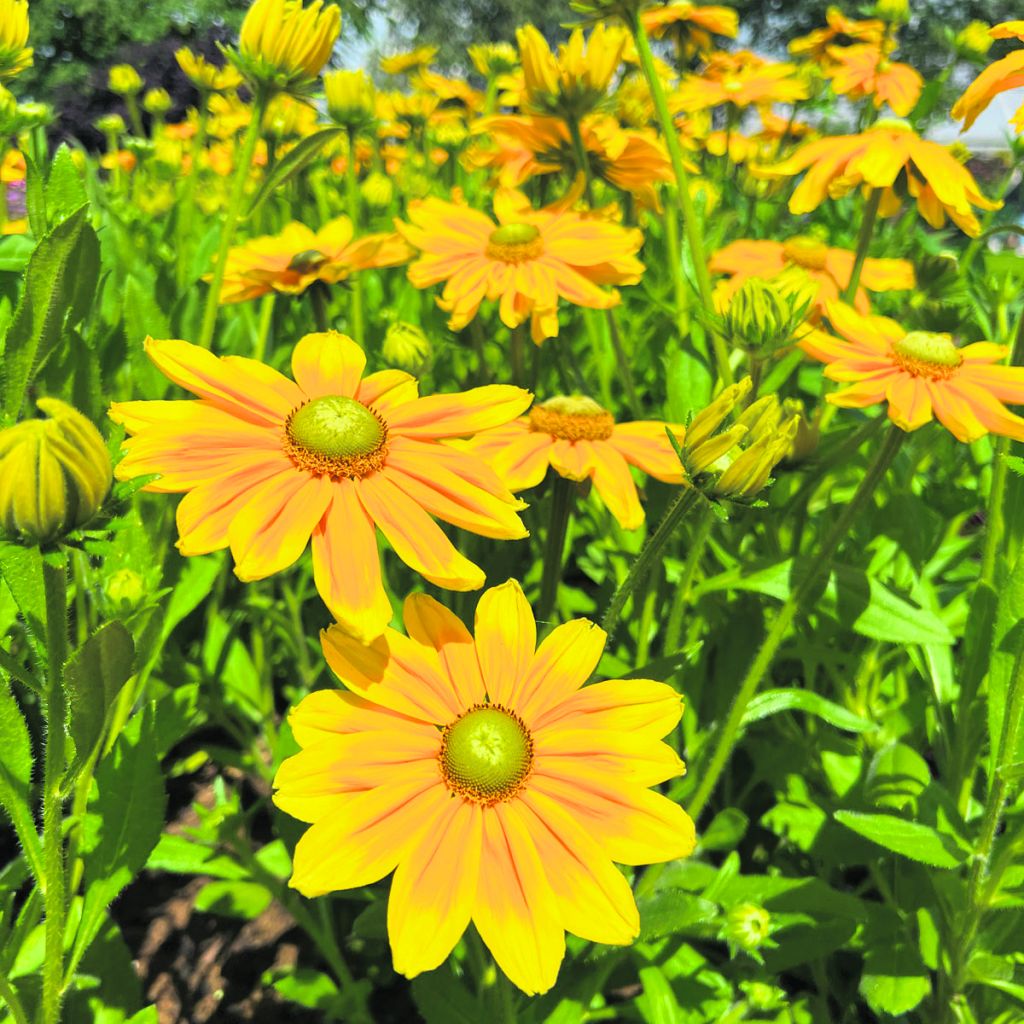
This award-winning variety features large flowers with pale yellow petals that fade to primrose around green central cones. The unusual colouring makes it highly distinctive.
Rudbeckia ‘Indian Summer’
Known for its exceptionally large blooms, this variety can produce flowers up to 20cm across. The bright golden petals create a bold statement in borders.