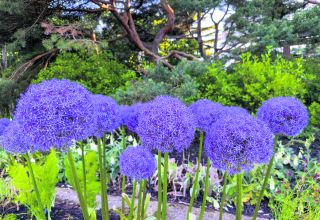
Alliums, or flowering onions, are among the most rewarding plants a gardener can grow. With their dramatic shapes, vibrant colours, and ease of care, they bring structure and elegance to any garden. From towering purple globes to delicate nodding blooms, there is an allium for every taste and space.
Alliums, commonly known as flowering onions are perhaps the most striking and architecturally dramatic plants in gardening.
Famous for their globe-shaped blooms perched on tall, elegant stems, they create a bold visual statement in borders, cottage gardens, and contemporary landscapes alike. Though closely related to everyday vegetables like onions, garlic, and leeks, ornamental alliums are grown primarily for their flowers rather than culinary use.
Belonging to a vast genus with over 700 species, alliums offer remarkable diversity in size, colour, flowering time, and form. From tiny alpine species to towering giants over one and a half metres tall, they fill an important seasonal gap—flowering after spring bulbs like tulips and before summer perennials reach their peak.
The genus allium is part of the Amaryllidaceae family and consists mainly of bulbous perennials. Most species grow from underground bulbs, though some develop from rhizomes. They are characterised by:
- Narrow, strap-like leaves (often dying back before flowering)
- A leafless flowering stem (scape)
- An umbel—a cluster of small flowers forming a spherical or dome-like head
Their characteristic onion-like scent is usually only noticeable when leaves are crushed, making ornamental varieties pleasant additions to gardens.
Ancient and Early Use
Alliums have a long and fascinating history intertwined with human civilisation. Edible species such as onions and garlic have been cultivated for thousands of years, with records dating back to ancient Egypt, Greece, and Rome. These plants were valued not only for their flavour but also for their medicinal properties. The word allium is derived from Latin, meaning garlic.
While edible alliums were widely used in ancient times, ornamental alliums gained popularity much later. It was not until the late 19th century that botanists and plant collectors began introducing striking wild species—particularly from Central Asia—into European horticulture.
These introductions revealed the dramatic potential of the genus:
- Large spherical blooms
- Unusual architectural forms
- Long-lasting dried seed heads
Since then, extensive breeding has produced a wide array of garden-worthy cultivars, many showcased in prestigious flower show events.
Varieties of alliums
With hundreds of species and cultivars, alliums can be grouped by size, flowering time, and flower shape.
Giant alliums
These are the most iconic types, known for their large, globe-shaped blooms:
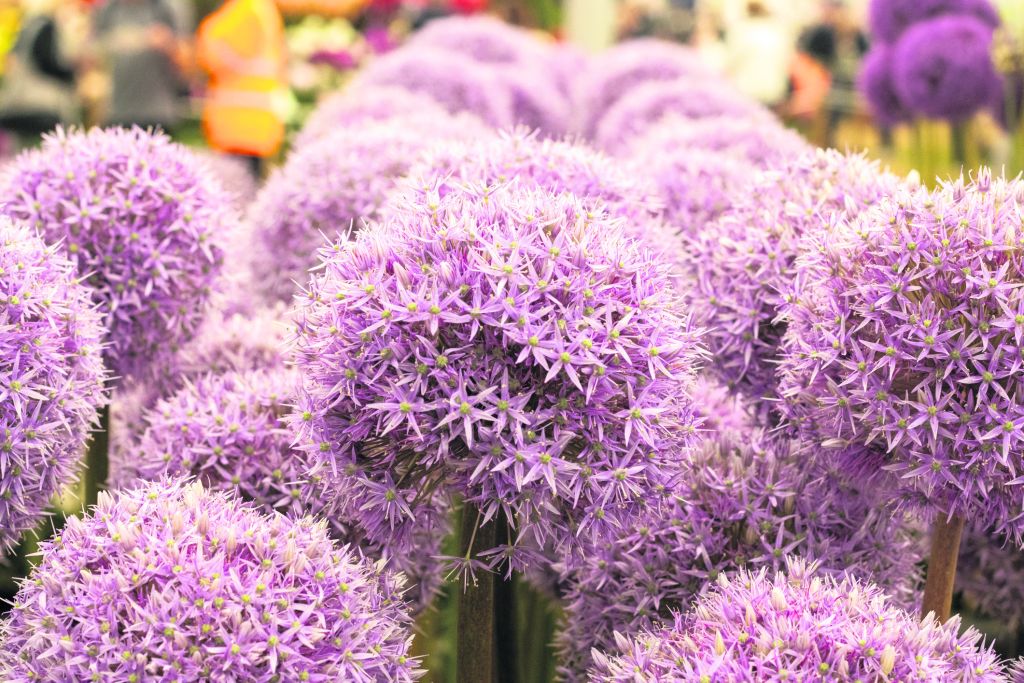
Allium ‘Globemaster’ – Massive purple spheres, up to 20 cm across
Allium ‘Gladiator’ – Tall stems with large lavender-purple heads
Allium hollandicum ‘Purple Sensation’ – One of the most popular garden varieties
These varieties can reach heights of up to two metres.
Medium-sized border alliums
Perfect for mixed borders and cottage gardens:
Allium aflatunense – Early summer flowering, rich purple tones
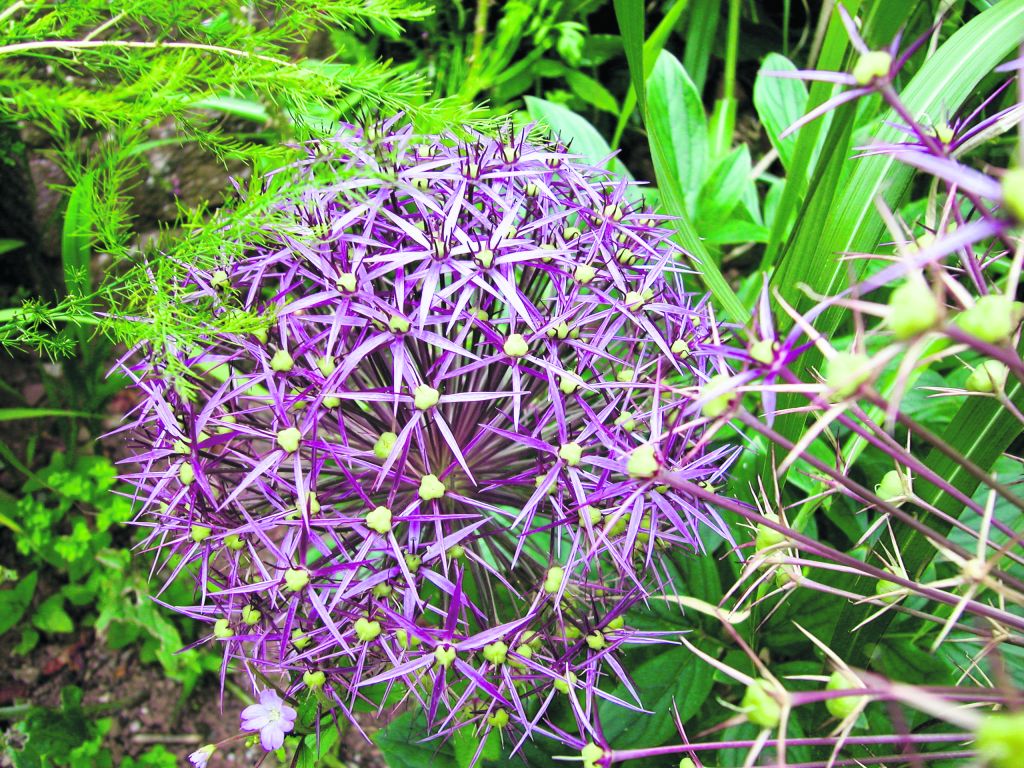
Allium cristophii – Starburst-like flowers with a metallic sheen
Allium caeruleum – Distinctive sky-blue blooms
These provide strong colour and structure without overwhelming surrounding plants.
Drumstick alliums
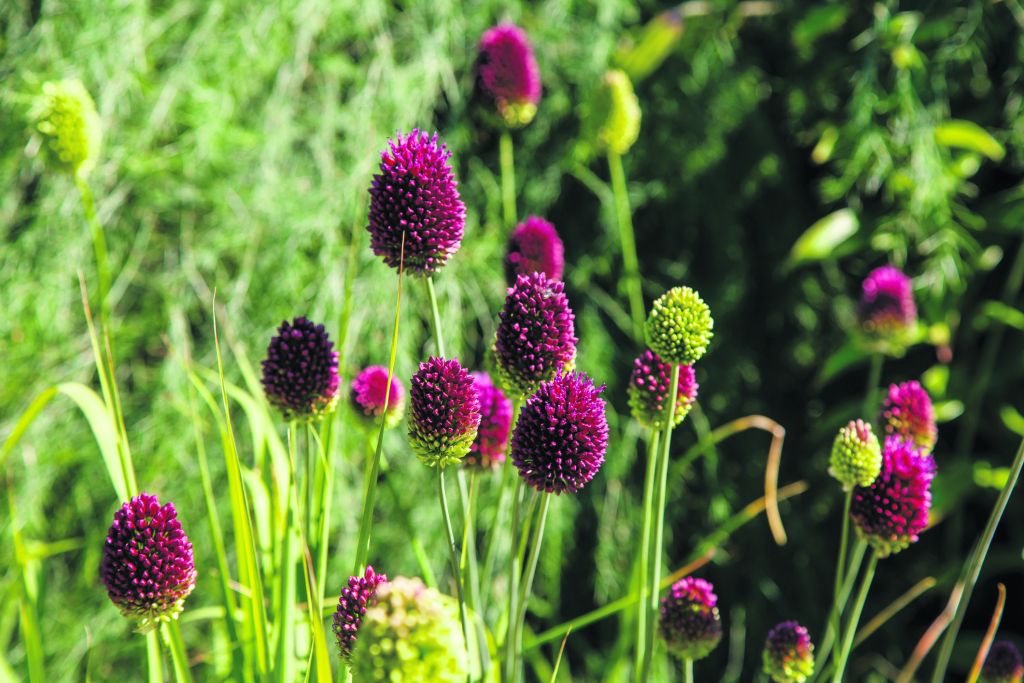
These have smaller, egg-shaped flower heads:
Allium sphaerocephalon (drumstick allium) – Deep burgundy purple
Excellent for naturalistic planting and meadow-style gardens
Their subtle form contrasts beautifully with larger alliums.
Small and rock garden alliums
Compact species suited for containers and rockeries:
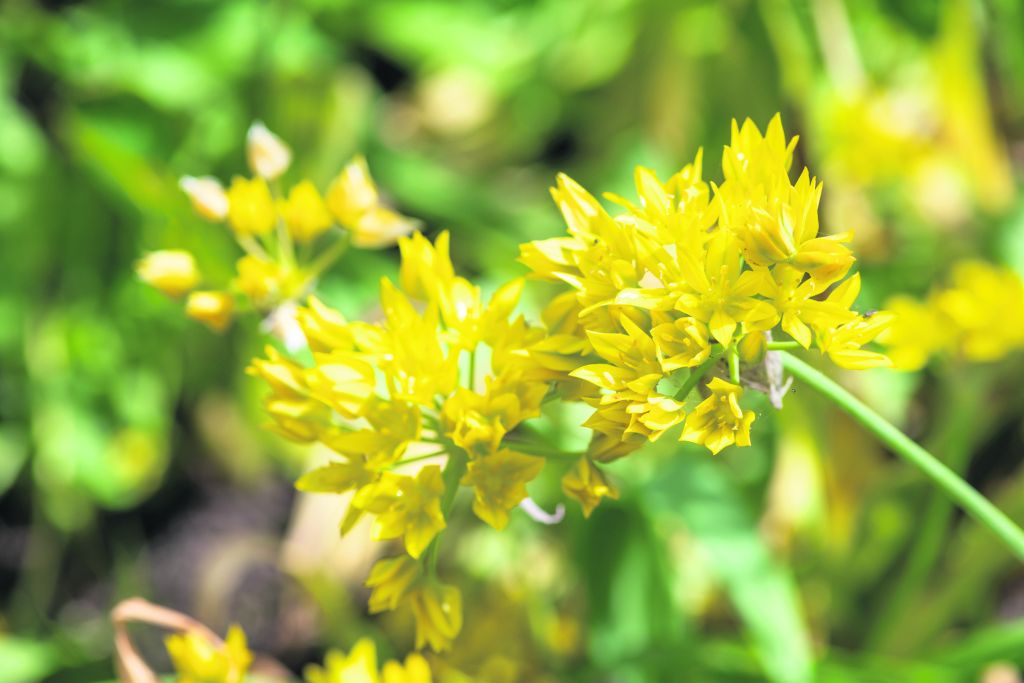
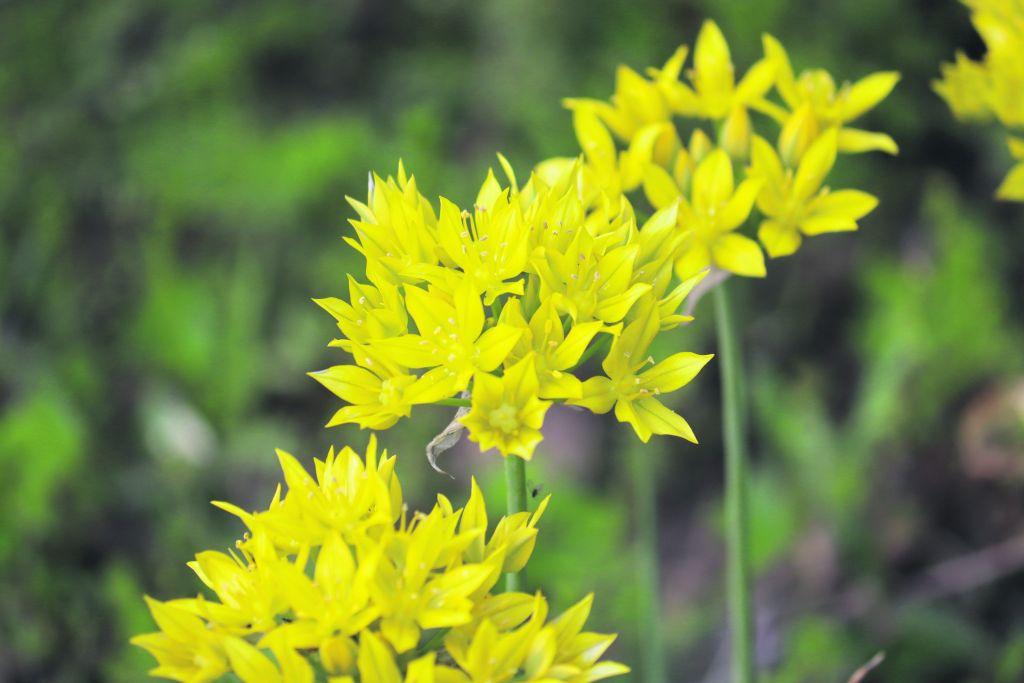
Allium moly – Bright yellow flowers
Allium karataviense – Broad leaves and low-growing blooms
Allium unifolium – Pink clusters
These are ideal for smaller spaces or edging.
Specialty alliums
Some alliums break the classic “purple globe” stereotype:
Nodding or bell-shaped flowers (Allium cernuum)
Firework-like bursts (Allium schubertii)
White forms like Allium ‘Mount Everest’
Colours range from white and pink to blue and even yellow.
How to grow alliums
Alliums are one of those plants that offer a huge amount of beauty and style in return for very little effort – you simply put them in the ground, and they return spring after spring. They consistently provide weeks and weeks of glamour in the borders.
From the humble onion family, they are the unlikely sirens of the garden – their globes are held aloft on long, strong stems, and they are excellent for cutting when in flower or as dried, decorative seed pods. You can’t beat alliums for adding late spring and summer pizzazz – explore the range of allium bulbs in all shades of purple, as well as white and blue.
Allium bulbs should be planted outdoors in autumn.
Dig a hole for each bulb, or if you are planting lots in one go, dig a trench. Plant in good drifts, rather than in twos and threes to avoid a dotty look.
On heavy soil spread a two inch layer of grit over the bottom of the hole or trench.
Make sure the hole is at least twice the depth of the bulb, and leave a gap of at least three times the bulb width between each bulb. For small and medium-sized bulbs (such as ‘Purple Sensation’), this is around 10-15cm deep and 10-15cm apart. For the larger varieties (such as ‘Purple Rain’) it’s around 15cm (deep, but at least 20-30cm (apart as they need more space for their much larger flower heads and foliage. Giants like ‘Globemaster’ need to be 30-45cm apart to accommodate their gorgeous heads.
Place your bulbs on the bottom of the trench/hole and then cover them up – if on very heavy soil, mix in about one-third grit to two-thirds soil to fill in.
Alliums are drought tolerant so are unlikely to need watering if planted in the ground; they will be watered by rain through the winter.
On poor soil, it’s worth giving almost all spring-flowering bulbs a potash feed in the early spring. This helps feed the bulbs and will encourage them to stick around and flower on and on for years. Alliums are usually grown for their ornamental heads which look good after they have gone to seed. If you want to minimise seedlings, you can remove the heads before the seeds ripen.
All bulbs do best if you minimise the number of leaves, you cut when you pick the flowers.
Problem free?
Ornamental alliums are usually relatively problem free in the garden but can sometimes be affected by the diseases common to edible alliums like onions and garlic. Onion fly, allium white rot and downy mildew are all common issues for edible alliums that can sometimes affect the ornamental varieties. To help prevent this, avoid planting ornamental alliums where edible alliums have been planted before.
Onion fly
The maggots of the onion fly (which looks like a small grey house fly) do the most damage, eating the roots of plants in the onion family. If this is happening, the plant may fail altogether, or you might notice yellowing leaves.
The bulbs should be dug up – if you see any maggots or larvae, dispose of the bulbs straight away.
Allium white rot
This is a fungal disease that impacts the bulb and more commonly affects onions, garlic and leeks. The bulb will show signs of furry white growth and leaves might yellow and wilt. Bulbs should be disposed of – avoid planting any alliums in the affected area in the future as the fungus can survive in the soil for years.
Both the fly and the maggots of the allium leaf miner cause damage to alliums – the female flies’ puncture and feed on the leaves, while the larvae feed on the stems and bulbs. Both the flies and the pupae are about 3mm long. The plant is likely to show distorted or twisted leaves.
Historically rooted in ancient agriculture and later embraced by ornamental horticulture, alliums have evolved into a modern garden essential. Whether planted in sweeping drifts or tucked into mixed borders, they provide a unique combination of beauty, resilience, and ecological value.
For both beginners and experienced gardeners, alliums offer something rare in gardening: maximum impact with minimal effort—a true hallmark of great plants.