September is possibly the finest month to go foraging. Across Devon, Cornwall, Somerset and Dorset and the south, in this hottest of summers the hedgerows are already changing colour and the countryside is offering up the first real taste of autumn.
This is a month of abundance even in the year of the heatwaves. Brambles are full of blackberries although desperate for rain to swell them, elder trees carry clusters of dark berries, hazelnuts are beginning to ripen and the first autumn fungi appear beneath the trees.
For the forager, September is less about finding one spectacular ingredient and more about bringing together a collection of small seasonal treasures. A handful of berries can become a sauce, a few apples can transform a pudding, while wild herbs and seeds can add unexpected flavour to everyday cooking.
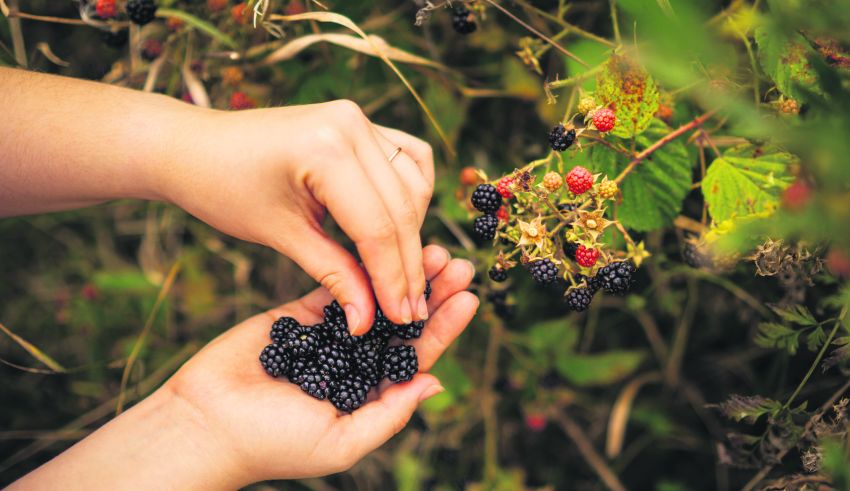
Blackberries: the hedgerow classic
Few things announce the arrival of autumn quite as clearly as ripe blackberries. Bramble bushes grow along lanes, field boundaries, woodland edges and rough ground.
Look for berries that are fully black, plump and come away easily from the plant. The best picking is often found away from busy roads.
Blackberries are remarkably versatile. Eat them fresh with yoghurt or porridge, bake them into crumbles and pies, or turn them into jam and jelly.
Elderberries: small berries, big flavour
By September, elderberries are often hanging in heavy purple-black clusters.
Unlike elderflowers, which are associated with early summer, elderberries have a deeper, wine-like character. They are best cooked rather than eaten raw in quantity. Once stripped from their stalks, they can be simmered with apples and spices to make a rich autumn cordial, syrup or jelly.
Elderberries also pair particularly well with blackberries. A mixed hedgerow jelly made from both captures the flavour of early autumn.
Hawthorn and rosehips
Hawthorn, or haw, produces small red berries that become increasingly noticeable as summer gives way to autumn. They have traditionally been used to make jellies and fruit wines, although they contain large seeds that need to be removed or strained out.
Rosehips are another September possibility. They are rich in flavour and can be made into syrups, jellies and teas.
Crab apples: the wild apple of autumn
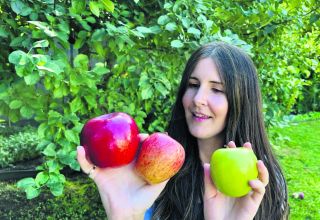
Crab apples are one of the most useful finds of the autumn. Small, often tart and sometimes surprisingly fragrant, they can be found on trees growing along hedgerows, woodland edges and old field boundaries.
They are generally too sharp to eat like a supermarket dessert apple, but that acidity makes them excellent for cooking. Combine them with blackberries for a classic autumn crumble or use them to make jelly. Crab apple jelly is particularly useful because it can accompany both sweet and savoury dishes.
Hazelnuts and beech nuts
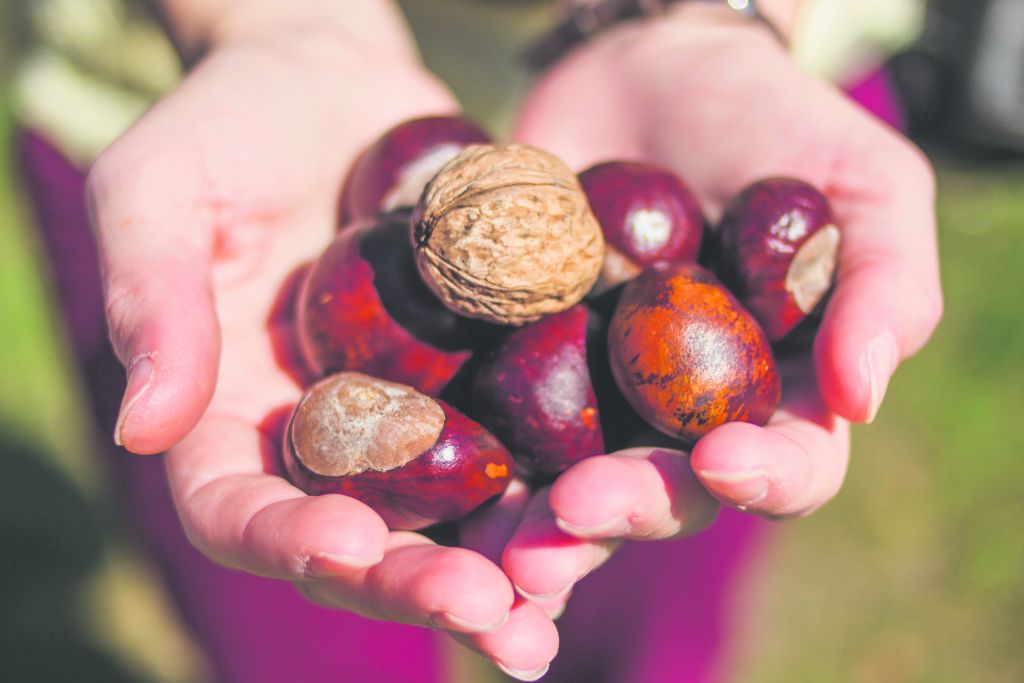
September also marks the beginning of nut season. Hazelnuts can be found in hedgerows and woodland, often hidden beneath leaves or clustered around hazel bushes.
Look for nuts that are mature and beginning to fall naturally. They can be eaten raw, roasted or chopped into cakes, biscuits and granola. Roasting brings out their sweetness and makes them an excellent addition to autumn salads.
Beech nuts, sometimes called beechmast, are another possibility in suitable woodlands.
The first autumn mushrooms
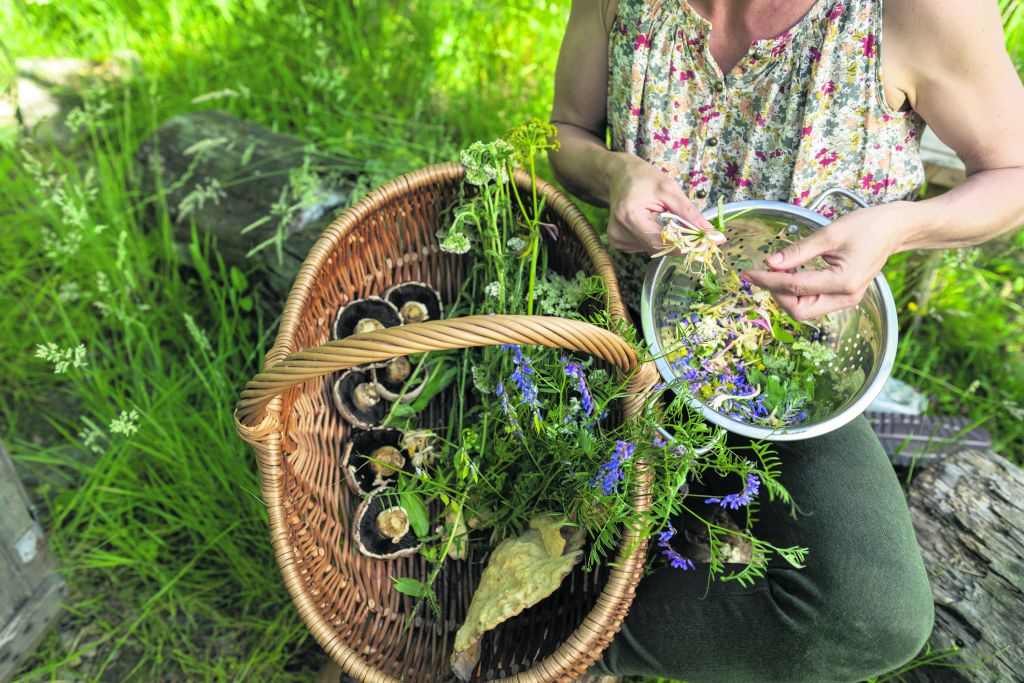
For many experienced foragers, September is when the woodland becomes particularly exciting. As conditions become cooler and wetter, fungi begin appearing in greater numbers.
Bay boletes, for example, can occur from late summer into autumn and are considered a good edible mushroom when correctly identified.
But mushrooms are very different from blackberries or apples. Identification needs to be absolute. Some edible species have poisonous lookalikes, and mistakes can have serious consequences. The Woodland Trust specifically recommends that inexperienced foragers leave fungi alone unless they are completely certain of the identification.
For anyone interested in mushroom foraging, September is an excellent time to learn rather than necessarily harvest. Take a good field guide and photograph unfamiliar species.
Nettles, sorrel and wild seeds
Not everything worth collecting in September is a berry or fruit. Nettles can provide seeds at this time of year, while sorrel may still be available in suitable places.
Nettle seeds have a slightly nutty, grassy character and can be dried and sprinkled over soups, salads or savoury dishes. Sorrel provides a sharp, lemony flavour that works with fish, potatoes, eggs and salads.
A September supper from the hedgerow
Perhaps the greatest pleasure of foraging is bringing several small finds together. Imagine a September pudding made with blackberries and crab apples, followed by local cheese served with a spoonful of homemade hawthorn or elderberry jelly.
The ingredients do not need to be exotic. They simply need to be seasonal, carefully gathered and properly prepared.
The countryside is offering an extraordinary variety of flavours, but it rewards observation rather than greed. Walk slowly, learn your plants, take only what you need and leave the hedgerows and woodlands looking much as you found them.
Forage lightly, leave plenty
The golden rule of autumn foraging is simple: abundance does not mean everything is yours to take.
Wild berries, nuts, seeds and fungi are important food sources for birds, mammals and insects. Take only what you genuinely intend to use, collect from plentiful populations and avoid damaging the plant itself. The Woodland Trust advises taking no more than you plan to consume, avoiding rare species and leaving sufficient food for wildlife and regeneration.
It is also important to check whether foraging is permitted where you are collecting. Some nature reserves, woodlands and privately managed sites have restrictions, while protected species must not be picked or uprooted. In England, wild plants are protected by law and removing a plant from land without the appropriate permission can be an offence.