Mark Hinsley considers the need for us to think more about drought resistant trees in our gardens and comes up with a fabulous option.
Many of us know about Kew Gardens in London and the Arnold Arboretum in Boston as important tree collections, but there are others.
One such is the Jardin des Plantes in Paris.
It was originally established as a garden for medicinal plants in 1635.
Its most celebrated head was Georges-Louis Leclerc, Comte de Buffon, who served as its head from 1739 until his death in 1788. Buffon doubled the size of the garden, expanding down to the banks of Seine. He also brought into the garden a team of important botanists and naturalists, one being Bernard de Jussieu.
Bernard de Jussieu became the teacher and mentor to Pierre Nicholas d’Incarville, a Jesuit Priest and amateur botanist. In 1740 d’Incarville was sent to China to convert Emperor Gaozong of Qing, personal name Hongli, who was the fifth emperor of the Qing dynasty. D’Incarvelle did not succeed in converting the emperor but did become something of a favourite. He was given access to the palace gardens and, in a reversal of the general trend, introduced a number of European plants to the palace grounds.
D’Incarvelle sent seeds of plants not known in the West to the Jardin des Plantes. These included; Ailanthus altissima the Tree of Heaven; Styphnolobium japonicum (aka Sophora japonicum) the Pagoda or Scholars’ tree and Koelreuteria paniculata the Golden Rain Tree or Pride of India.
It is the Koelreuteria paniculata that I wish to highlight today. It shares the ‘Golden Rain’ name with Laburnum due to its large panicles of bright yellow flowers. Pride of India is a little misleading, because it does not come from there. But common names are like that. Sophora is called the Scholars’ Tree, but it was Koelreuteria that was traditionally planted around the tombs of scholars in old China.
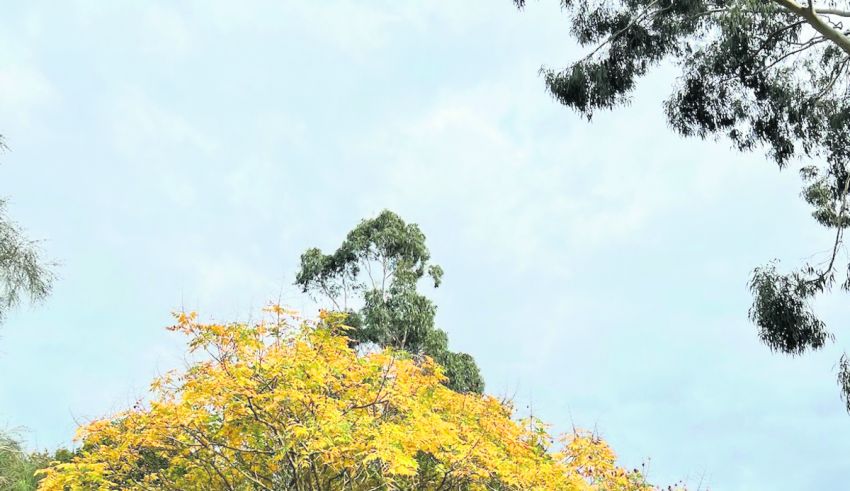
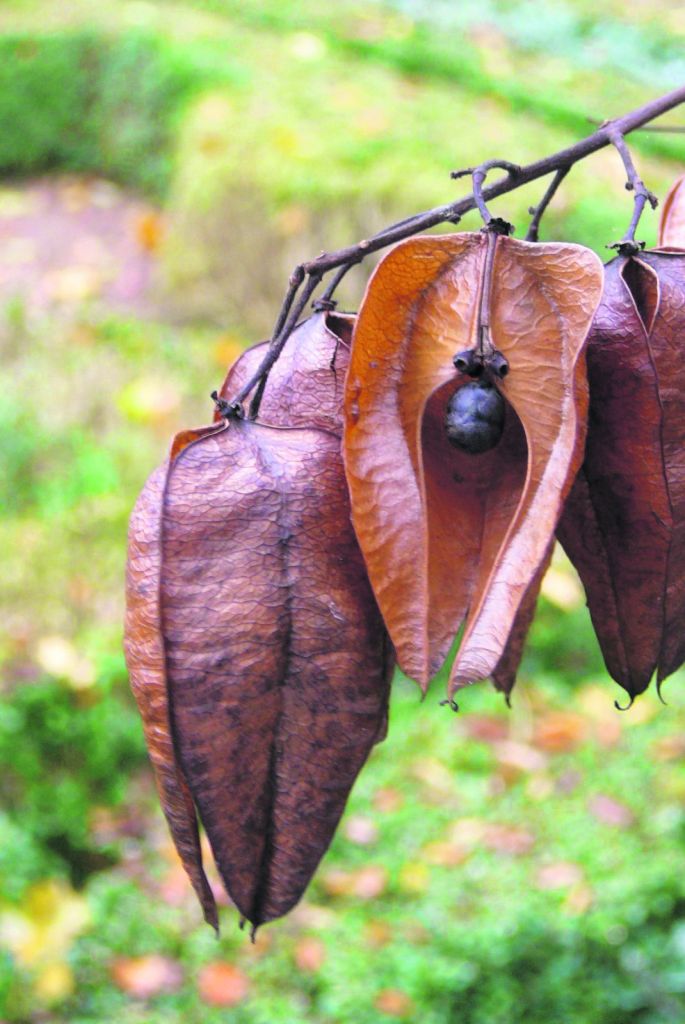
Koelreuteria is a real ‘all-rounder’. The leaves come on in late May, unfolding dark red, soon turning pale whitish yellow before becoming dark green. The flowers form in mid-August, small and bright yellow on widely branched panicles. The fruit is a papery bladder containing three black seeds which turn a conspicuous pink in Autumn whilst the leaves turn orange and yellow.
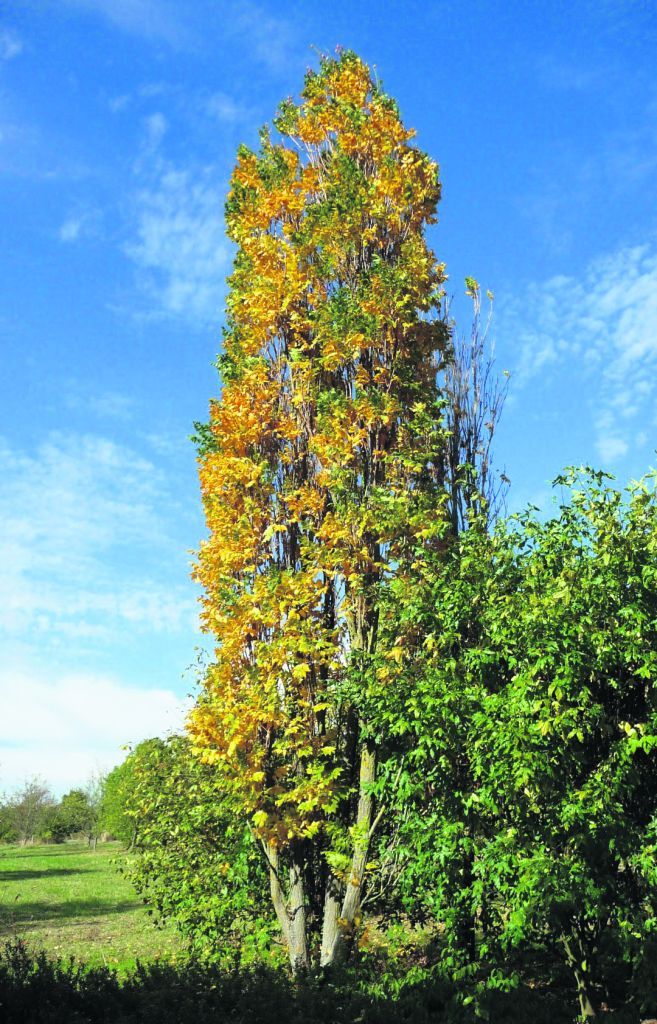
Seedling growth is quite rapid with the average increase in height over the first 20 years being about a foot (300mm), but it does not grow into a monster, with mature trees rarely reaching 60ft.
Koelreuteria was first cultivated in England by the Earl of Coventry at Croome, Worcestershire in 1763. It likes the southern climate, and you will not find it ‘oop north’. Loudon recorded a number of specimens in southern England in 1838, the tallest of which was at Ham House, London, measuring 42ft, but in 1911 Elwes found none of them, so it is not a long-lived tree, or it was not back then. We did have a mini-ice age between 1890 and 1900, which might have been the cause of the loss of the older specimens.
Koelreuteria will grow well in most soils, and flowers and fruits best in hot dry summers. It will fair best with some protection from northerly or easterly winds. There used to be a beauty in a garden beside the road out of Guildford towards Godalming when I was a student, but I don’t know if it is still there.
There is probably a bin store, or something else vital to mankind in its place now.
So, if you are wondering why I have brought this fabulous tree to your attention. It is very drought resistant, and we are going to need plenty of that in our gardens.
Mark Hinsley, of Mark Hinsley Arboricultural
Consultants Ltd, offering tree consultancy services.