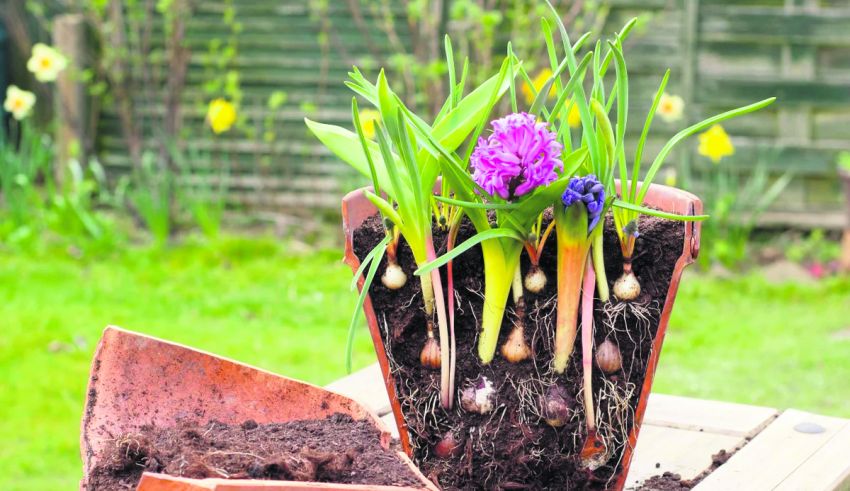
Planting bulbs in a clever layering method produces a wonderful spring display in containers making the most of a variety of spring bulbs.
The bulb lasagne method is a clever way of growing spring-flowering bulbs in containers. Instead of planting bulbs at one depth, several different types of bulbs are planted in layers, much like the layers of a lasagne. The result is a container that can produce flowers over a long period, often from late winter through spring. It is a great technique if you have limited space, as one pot can provide a succession of colourful flowers.
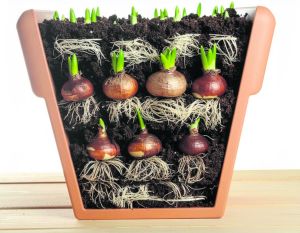
The planting regime is:
- Lilies at the bottom
- Tulips above them
- Daffodils next
- Snowdrops nearest the top
The bulbs should be planted around 10cm deep, with the layers covered well, creating a display that develops gradually as each variety comes into flower.
Dwarf narcissus), crocus, daffodils, tulips, lilies, anemones and snowdrops should be planted in September, around 10cm deep, and covered well in beds, lawns and borders. If planting in pots, bulbs can be layered using the ‘bulb lasagne’ method, where the latest flowering bulbs are placed nearest the bottom of the pot. Lilies, then tulips, then daffodils, with snowdrops nearest the top (around 10cm from the top of the pot), will provide a continuous flowering display throughout spring.
The first step is to choose a suitable container. It should be reasonably deep and, most importantly, have good drainage holes in the bottom. A large pot will give the bulbs enough room to grow and allows several layers to be planted. Terracotta pots are attractive and stable, while plastic containers are lighter and tend to retain moisture for longer. Whatever container is chosen, drainage is essential because bulbs sitting in waterlogged compost can rot.
The principle behind the lasagne method is simple: the largest and latest-flowering bulbs go deepest, while smaller and earlier-flowering bulbs are planted nearer the surface.
To begin, place a layer of broken crocks or another suitable drainage material over the drainage holes if required, followed by a layer of good-quality, free-draining multi-purpose compost. Place the largest bulbs on this first layer of compost, leaving a little space between them. The bulbs should not touch one another because overcrowding can encourage disease and make it difficult for them to develop properly. Cover the first layer with more compost and gently firm it down.
The next group of bulbs is then positioned above the first. These bulbs can be planted slightly closer together because the roots and shoots will occupy different spaces within the container. Add another layer of compost and then plant the smallest bulbs near the top. Finish with enough compost to leave a small gap below the rim of the pot, allowing space for watering without soil spilling over the edge.
Once planted, the container should be watered thoroughly and placed somewhere cool. During autumn and winter, the bulbs develop their roots and remain relatively inactive above ground. The compost should be kept slightly moist but never saturated. Containers can dry out during mild or windy weather, so they should be checked occasionally throughout winter.
As temperatures rise in late winter, the first shoots will begin to appear. Early bulbs such as crocuses may flower first, followed by daffodils and hyacinths, with tulips often providing a later display. This succession of flowers is one of the main attractions of the lasagne method. Instead of having a single short flowering period, the gardener can enjoy several waves of colour from the same pot.
After flowering, the foliage should be allowed to die back naturally. The leaves use sunlight to build up energy reserves in the bulb.