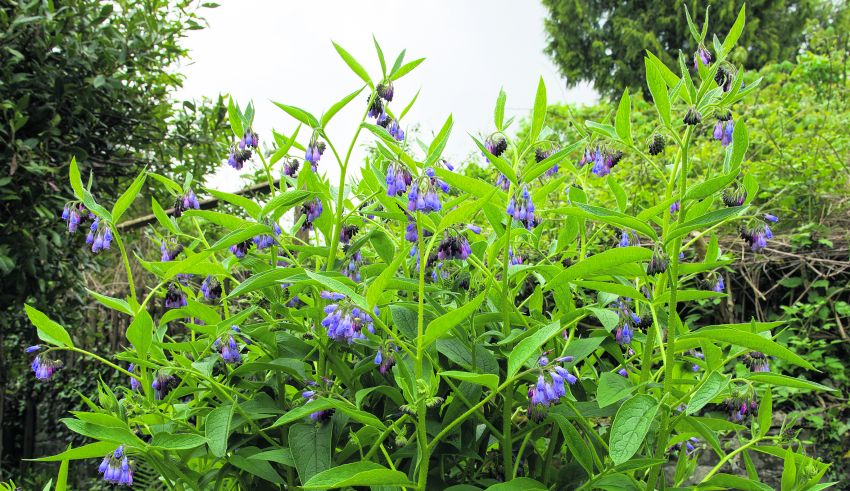
Comfrey is a versatile, valuable plant that excels as a soil improver and natural fertiliser. Easy to grow, its many uses make it a favourite with organic gardeners.
Comfrey is loved by organic gardeners because of the high potassium content of its leaves- two or three times that of farmyard manure.
It is also extremely easy to grow
The most common variety is Russian comfrey- Symphytum x uplandicum -introduced into this country in the 1870s by a certain Henry Doubleday, a Quaker smallholder who subsequently became the founder of Garden Organic (formerly known as the Henry Doubleday Research Association) and more latterly the HDRA.
A very tall, leafy, deep-rooted variety is rather oddly known as’ Blocking 14’ and is the one organic gardeners seek.
It grows well in the shade, does snot spread by seed but can nevertheless be invasive so needs to be carefully placed.
Comfrey is a hardy perennial herb that has been cultivated for centuries for its medicinal properties, soil-improving abilities, and usefulness in the garden. Known for its large, rough leaves and bell-shaped purple or cream flowers, comfrey is valued today primarily as a dynamic accumulator, drawing nutrients from deep within the soil and making them available for plants, animals, and people. With the right care and understanding, comfrey can be an extremely productive and beneficial addition to a garden.
Growing comfrey is relatively easy, as it is a resilient and adaptable plant.
It prefers a sunny or partially shaded location and thrives in deep, fertile soil with good drainage.
One of comfrey’s most notable features is its long taproot, which can extend several feet into the ground. This deep root system allows the plant to access nutrients such as potassium, calcium, and phosphorus that are unavailable to many other plants. Because of this, comfrey should be planted in a permanent location, as mature plants are difficult to remove once established.
Comfrey is most commonly propagated from root cuttings rather than seed, as seed-grown plants can be variable and slower to establish. Root cuttings planted in early spring or autumn will quickly produce new growth. Once planted, comfrey requires minimal maintenance.
It is drought tolerant once established, although regular watering will encourage faster leaf production. Cutting the leaves several times during the growing season promotes vigorous regrowth and prevents the plant from becoming too large or coarse.
In the garden, comfrey is best known for its role as a natural fertiliser. The leaves are rich in potassium, making them especially beneficial for flowering plants, fruit trees, tomatoes, and potatoes.
One of the most effective ways to use comfrey is as mulch. Freshly cut leaves can be laid around plants, where they break down rapidly and release nutrients into the soil. Alternatively, comfrey leaves can be added to the compost heap, where they act as a compost activator, speeding up decomposition.
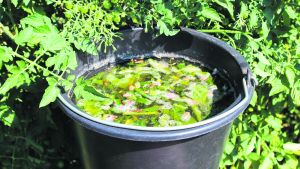
Another popular use is comfrey tea, a liquid fertiliser made by soaking leaves in water for several weeks. The resulting dark, strong-smelling liquid is diluted and applied to plants as a nutrient boost. This method allows gardeners to deliver comfrey’s nutrients directly to plant roots and foliage, making it an efficient and cost-free alternative to commercial fertilisers.
Comfrey can also be used as animal fodder in small quantities. Its protein-rich leaves have been fed to chickens, rabbits, and other livestock, though it should be offered in moderation and as part of a varied diet.