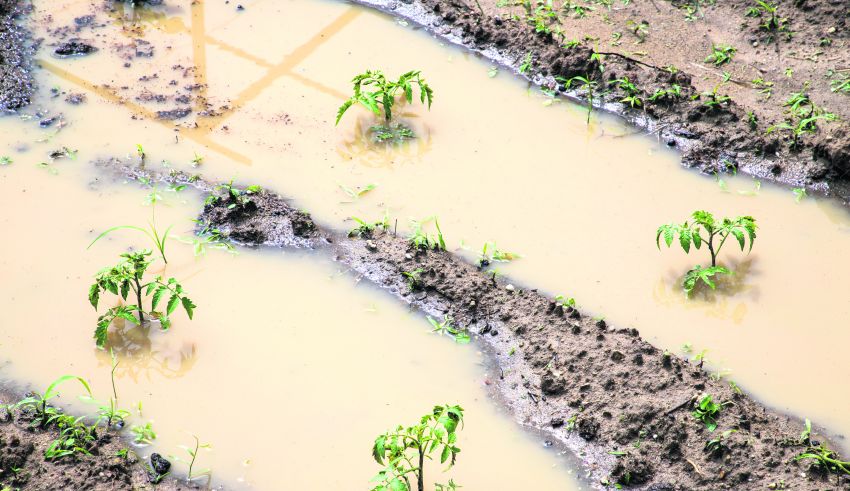
Gardens throughout the west country face a wet start to the new growing season – victims of weeks of wet weather which has saturated or even flooded the soil. It presents gardeners with an unenviable early season problem.
A wet early spring is probably the last thing gardeners want to see.
It is no surprise that this wet winter with often record levels of rainfall has turned hopeful gardens into a waterlogged challenge almost overnight. While winter moisture is often welcomed after dry months, excessive rainfall combined with low temperatures can flood beds, compact soil, and delay planting.
Understanding the problems caused by a flooded spring garden—and knowing how to respond—can make the difference between a lost season and a successful recovery.
One of the most immediate problems of a flooded garden is lack of oxygen in the soil. Plant roots need air as much as they need water, and when soil pores are filled with water for extended periods, oxygen is displaced. This leads to root stress or root rot, particularly in perennials, shrubs, and early vegetables such as onions or peas.
Plants affected by waterlogging often appear yellowed, stunted, or limp, even though the soil is wet. In severe cases, they may collapse entirely.
Soil structure also suffers during a wet spring. Repeated rainfall and standing water breaks down soil aggregates, especially in clay-heavy soils.
When gardeners walk or work on wet ground, compaction occurs easily, squeezing out air spaces and creating a dense, lifeless growing medium. Once compacted, soil drains even more poorly, creating a vicious cycle that can persist for years if not corrected.
Flooding also delays planting and soil warming. Seeds sown into cold, saturated soil are prone to rotting before germination, and transplants may fail to establish. Beneficial soil organisms, which help release nutrients to plants, are less active in cold, wet conditions. At the same time, weeds adapted to damp soils often thrive, gaining a head start over cultivated plants.
Another consequence of prolonged wetness is nutrient loss. Heavy rain can leach nitrogen and other soluble nutrients deep below the root zone or wash them away entirely. This leaves plants hungry just as they begin active growth. Floodwater can also carry contaminants or fungal spores into the garden, increasing the risk of disease later in the season.
Dealing with a flooded spring garden starts with patience. One of the most important responses is knowing when not to act. Avoid digging, tilling, or even walking on saturated soil until it has drained sufficiently. A simple test is to squeeze a handful of soil: if it forms a sticky ball or releases water, it is too wet to work. Waiting protects soil structure and prevents long-term damage.
Improving drainage is a key long-term solution. Raised beds are one of the most effective ways to garden in wet conditions, as they allow excess water to drain away from root zones more quickly. Incorporating organic matter such as compost, leaf mould, or well-rotted manure improves soil structure over time, increasing its ability to hold both air and water in balance.
Plant choice and timing also matter. Delaying planting until soil temperatures rise and moisture levels stabilise can save seeds and transplants from failure. Choosing varieties tolerant of wet conditions—such as willows, dogwoods, irises, or certain salad greens—can reduce losses in persistently damp areas. For vegetable gardeners, starting plants indoors allows growth to begin while outdoor conditions improve.
After flooding subsides, replenishing nutrients is important. A light application of balanced fertiliser or organic amendments can help replace what was lost to leaching. Monitoring plants closely for signs of fungal disease and removing affected material promptly can prevent problems from spreading later in the season.